iroh's Mesh LLM pools GPUs across machines into one OpenAI-compatible endpoint
iroh launched Mesh LLM, an 18 MB tool that pools GPUs across machines into a single OpenAI-compatible API endpoint for models up to 235B parameters.
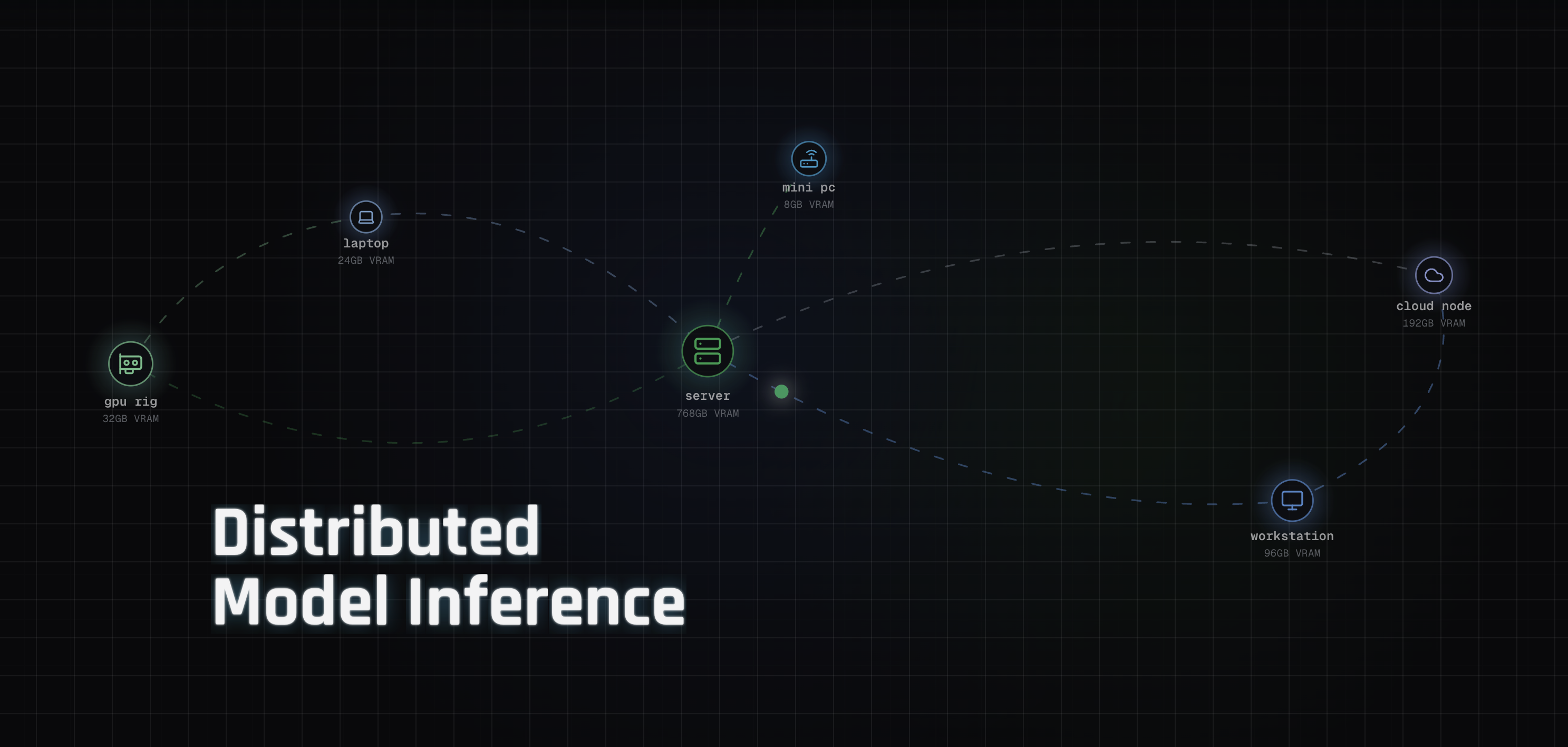
iroh released Mesh LLM on July 11, an 18 MB tool that pools GPUs and memory across multiple machines and exposes the combined compute as a single OpenAI-compatible API endpoint at localhost:9337/v1. The pitch is running large models on whatever hardware is on hand, without renting cloud GPUs, behind an endpoint that existing OpenAI-compatible apps can call unchanged.
iroh, legally n0, inc., is the company behind the peer-to-peer networking library of the same name. Mesh LLM routes each request one of three ways: to a local GPU, to a peer that already has the model loaded, or by splitting a large model across machines by layer range — a mode it calls Skippy — for models up to 235 billion parameters.
It ships with more than 40 supported models, from roughly 500-million-parameter models that fit on a laptop to 235-billion-parameter mixture-of-experts systems. Connections run over iroh’s authenticated QUIC transport using three application-layer protocols, with two relays in separate regions as a fallback when direct peer connections fail.
The distributed-inference approach is not new in research, but packaging it into a small client with a drop-in API is the selling point here. iroh’s post is the only public account of Mesh LLM so far, and neither the Skippy layer-split throughput nor its performance on real multi-machine workloads has been independently tested. The Mesh LLM launch post details the protocol design and the supported model list.

Founder and Chief Editor of Data Phoenix — a San Francisco Bay Area media and education platform focused on AI and Data.
More news
AWS releases six open-source Hugging Face deployment skills for SageMaker
Google Research releases MilleMiglia logistics benchmark generator

AWS launches AgentCore Runtime V2 with elastic memory and snapshot starts