UDE: A Unified Driving Engine for Human Motion Generation
Unified Driving Engine (UDE) is the first unified driving engine that enables generating human motion sequences from natural language or audio sequences. It can support both text-driven and audio-driven human motion generation.
Abstract
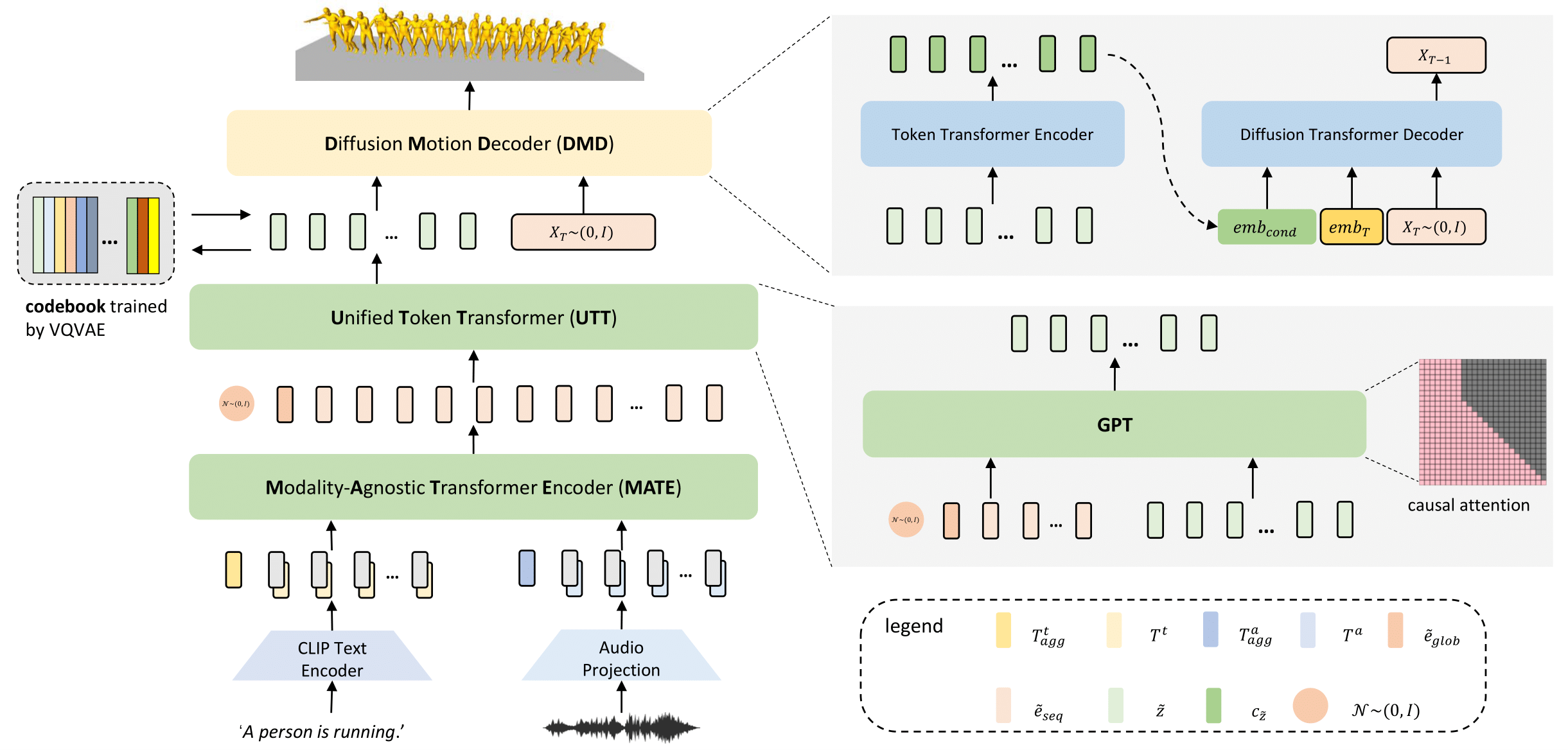
Generating controllable and editable human motion sequences is a key challenge in 3D Avatar generation. It has been labor-intensive to generate and animate human motion for a long time until learning-based approaches have been developed and applied recently. However, these approaches are still task-specific or modality-specific. In this paper, we propose “UDE”, the first unified driving engine that enables generating human motion sequences from natural language or audio sequences. Specifically, UDE consists of the following key components: 1) a motion quantization module based on VQVAE that represents continuous motion sequence as discrete latent code, 2) a modality-agnostic transformer encoder that learns to map modality-aware driving signals to a joint space, and 3) a unified token transformer (GPT-like) network to predict the quantized latent code index in an auto-regressive manner. 4) a diffusion motion decoder that takes as input the motion tokens and decodes them into motion sequences with high diversity. We evaluate our method on HumanML3D and AIST++ benchmarks, and the experiment results demonstrate our method achieves state-of-the-art performance
Video
Overview
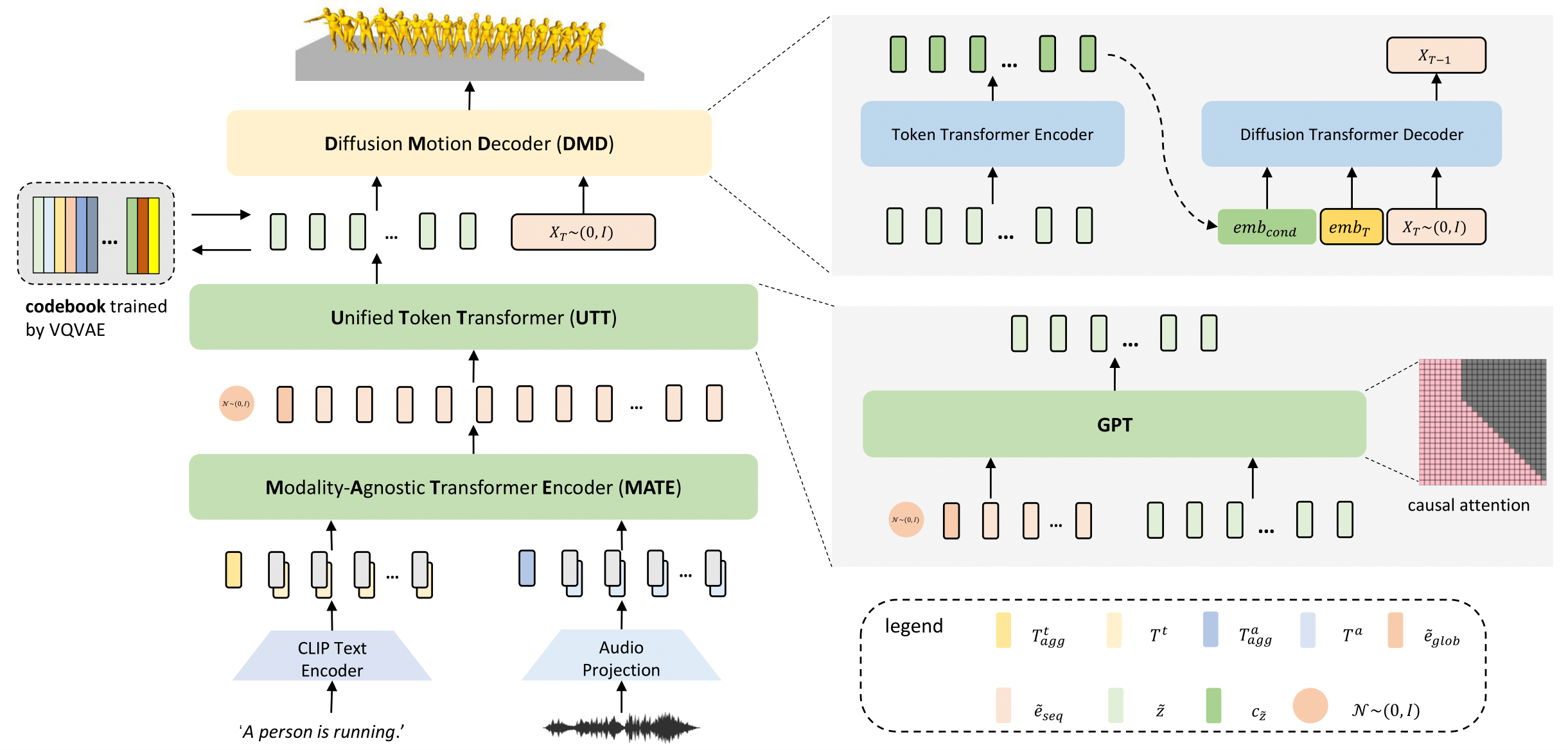
The overview of our method. Our model consists of four key components. First, we train a codebook using VQ-VAE. For the codebook, each code represents a certain pattern of the motion sequence. Second, we introduce a ModalityAgnostic Transformer Encoder (MATE). It takes the input of different modalities and transforms them into sequential embedding in one joint space. The third component is a Unified Token Transformer (UTT). We feed it with sequential embedding obtained by MATE and predict the motion token sequences in an auto-regressive manner. The fourth component is a Diffusion Motion Decoder (DMD). Unlike recent works, which are modality-specific, our DMD is modality-agnostic. Given the motion token sequences, DMD encodes them to semantic-rich embedding and then decodes them to motion sequences in continuous space by the reversed diffusion process.
Founder and Chief Editor of Data Phoenix — a San Francisco Bay Area media and education platform focused on AI and Data.
Continue reading
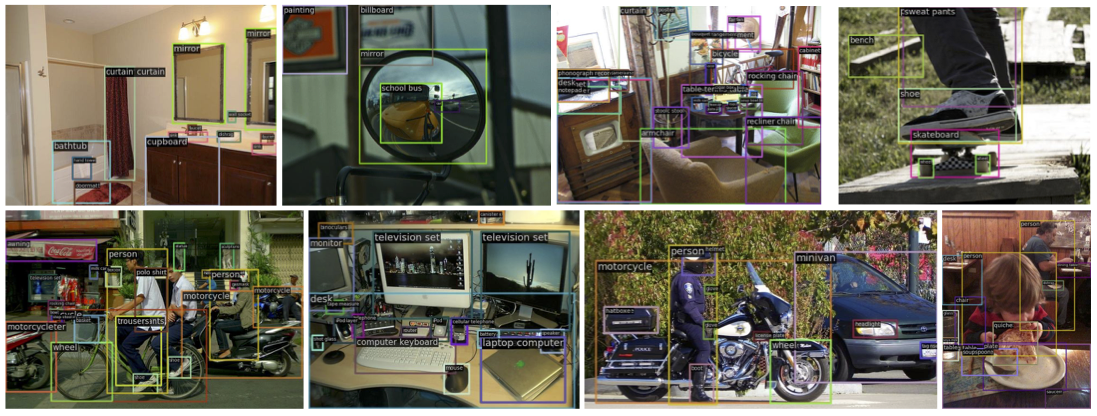
YOLO-World: Real-Time Open-Vocabulary Object Detection
YOLO-World boosts YOLO with open-vocabulary detection via vision-language modeling, pre-training on large datasets. Efficiently detects objects zero-shot, outperforming state-of-the-art in accuracy and speed.
Dmytro Spodarets·Feb 12, 2024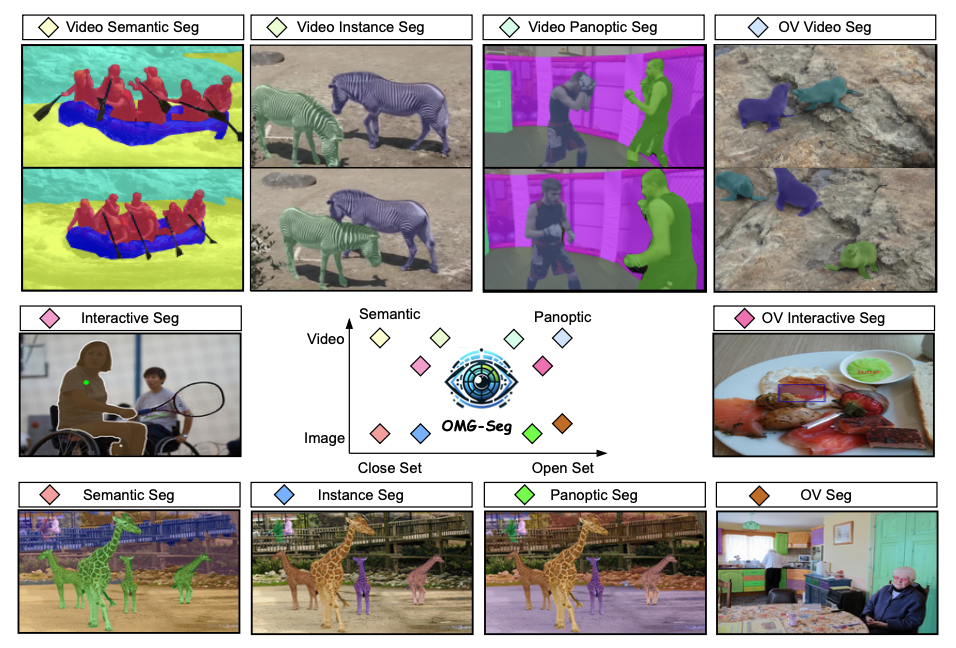
OMG-Seg: Is One Model Good Enough For All Segmentation?
OMG-Seg is One Model that is Good enough to efficiently and effectively handle all the segmentation tasks, including image semantic, instance, and panoptic segmentation, as well as their video counterparts, open vocabulary settings, prompt-driven, interactive segmentation.
Dmytro Spodarets·Feb 8, 2024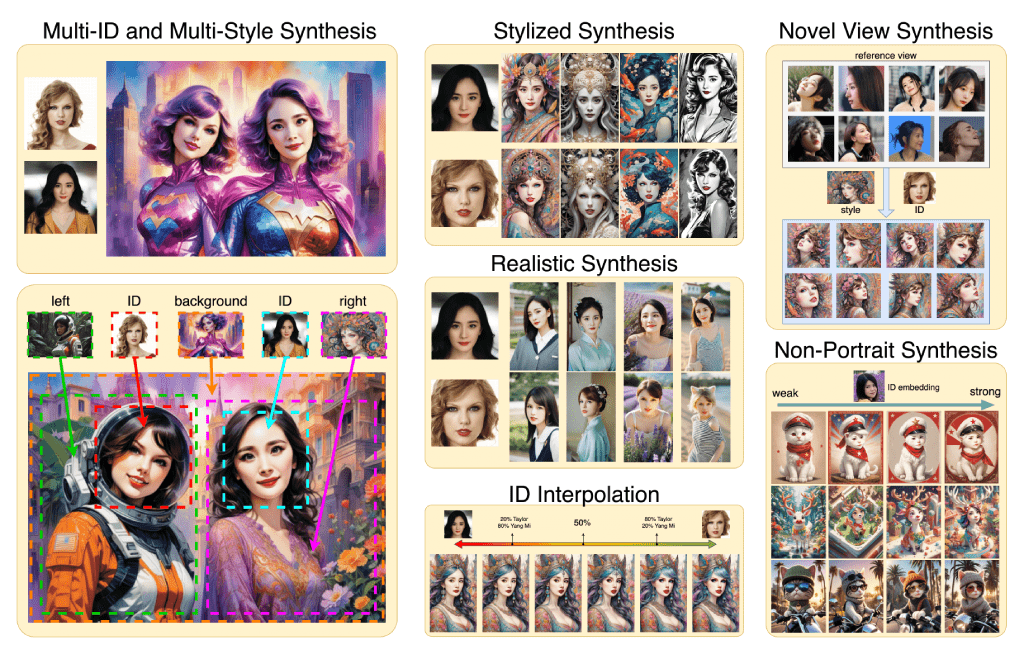
InstantID : Zero-shot Identity-Preserving Generation in Seconds
InstantID, powered by diffusion models, offers plug-and-play image personalization in various styles using one facial image, ensuring high fidelity. It demonstrates remarkable efficiency and performance, making it highly beneficial for applications requiring identity preservation.
Dmytro Spodarets·Feb 5, 2024