NeRF-Art: Text-Driven Neural Radiance Fields Stylization
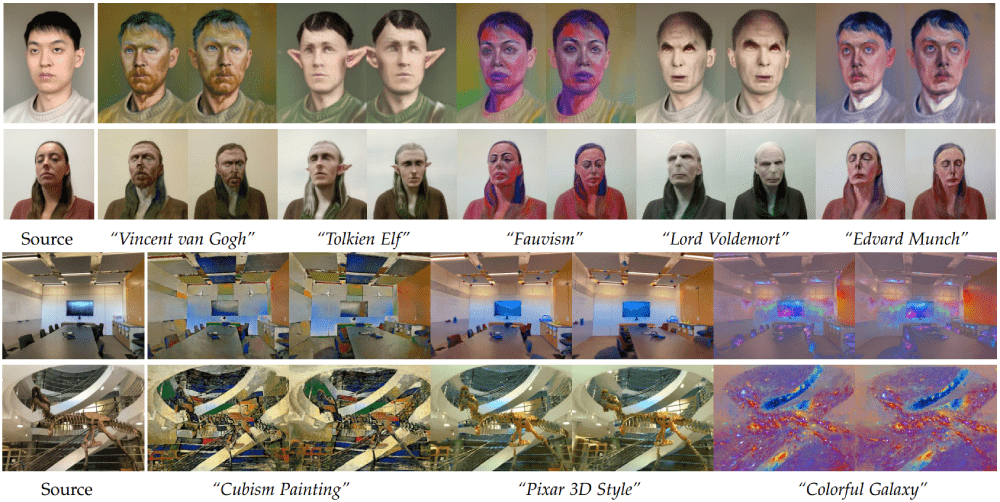
Neural radiance fields (NeRF) enable high-quality novel view synthesis. Editing NeRF, however, remains challenging. In this paper, the authors present NeRF-Art, a text-guided NeRF stylization approach that manipulates the style of a pre-trained NeRF model with a single text prompt.
Abstract
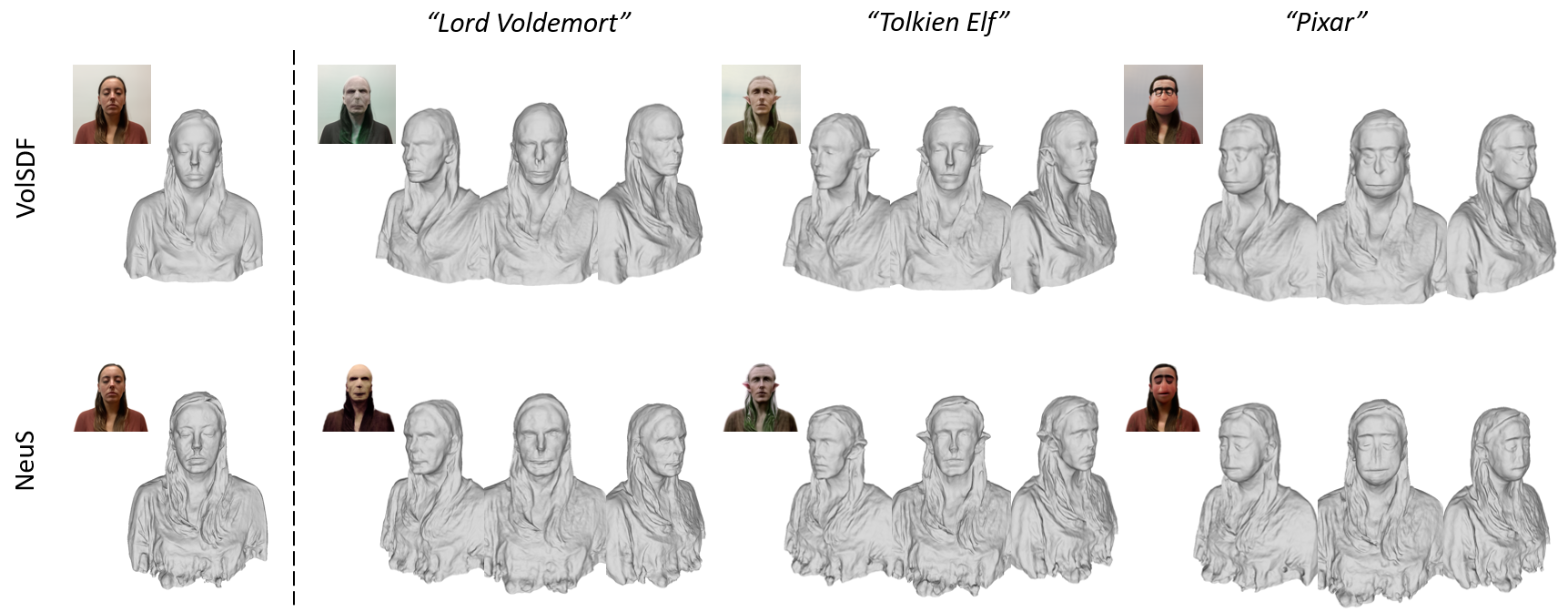
As a powerful representation of 3D scenes, Neural radiance fields (NeRF) enable high-quality novel view synthesis given a set of multi-view images. Editing NeRF, however, remains challenging, especially on simulating a text-guided style with both the appearance and the geometry altered simultaneously. In this paper, we present NeRF-Art, a text-guided NeRF stylization approach that manipulates the style of a pre-trained NeRF model with a single text prompt. Unlike previous approaches that either lack sufficient geometry deformations and texture details or require meshes to guide the stylization, our method can shift a 3D scene to the new domain characterized by desired geometry and appearance variations without any mesh guidance. This is achieved by introducing a novel global-local contrastive learning strategy, combined with the directional constraint to simultaneously control both the trajectory and the strength of the target style. Moreover, we adopt a weight regularization method to effectively suppress the cloudy artifacts and the geometry noises when transforming the density field for geometry stylization. Through extensive experiments on various styles, our method is demonstrated to be effective and robust regarding both single-view stylization quality and cross-view consistency.
Pipeline
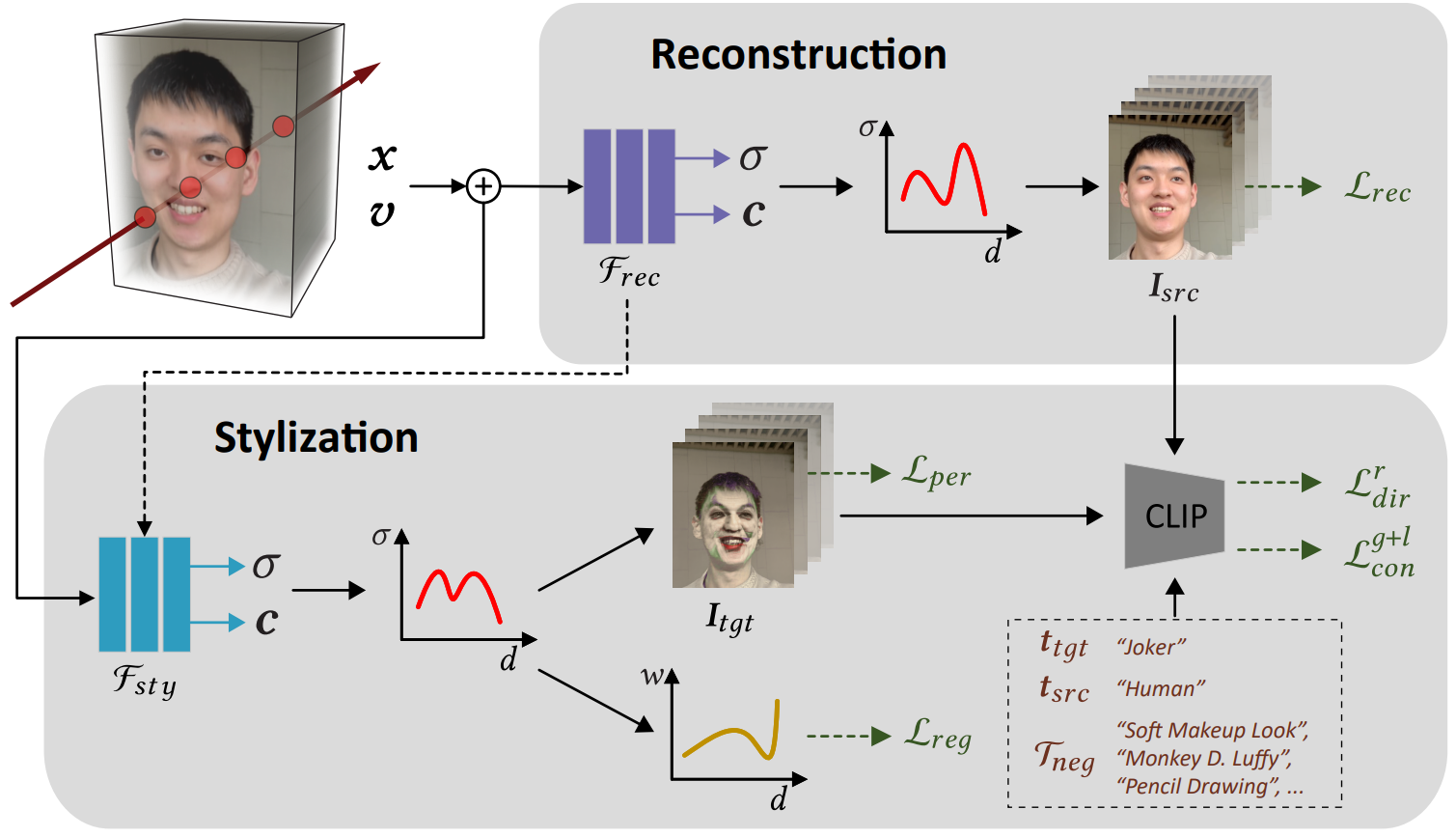
NeRF-Art Pipeline. In the reconstruction stage, our method first pre-trains the NeRF model of the target scene from multi-view input with reconstruction loss. In the stylization stage, our method stylized NeRF model, guided by a text prompt, using a combination of relative directional loss and global-local contrastive loss in the CLIP embedding space, plus weight regularization loss and perceptual loss.
Geometry Evaluation
Video

Founder and Chief Editor of Data Phoenix — a San Francisco Bay Area media and education platform focused on AI and Data.
Continue reading
YOLO-World: Real-Time Open-Vocabulary Object Detection
YOLO-World boosts YOLO with open-vocabulary detection via vision-language modeling, pre-training on large datasets. Efficiently detects objects zero-shot, outperforming state-of-the-art in accuracy and speed.
Dmytro Spodarets·Feb 12, 2024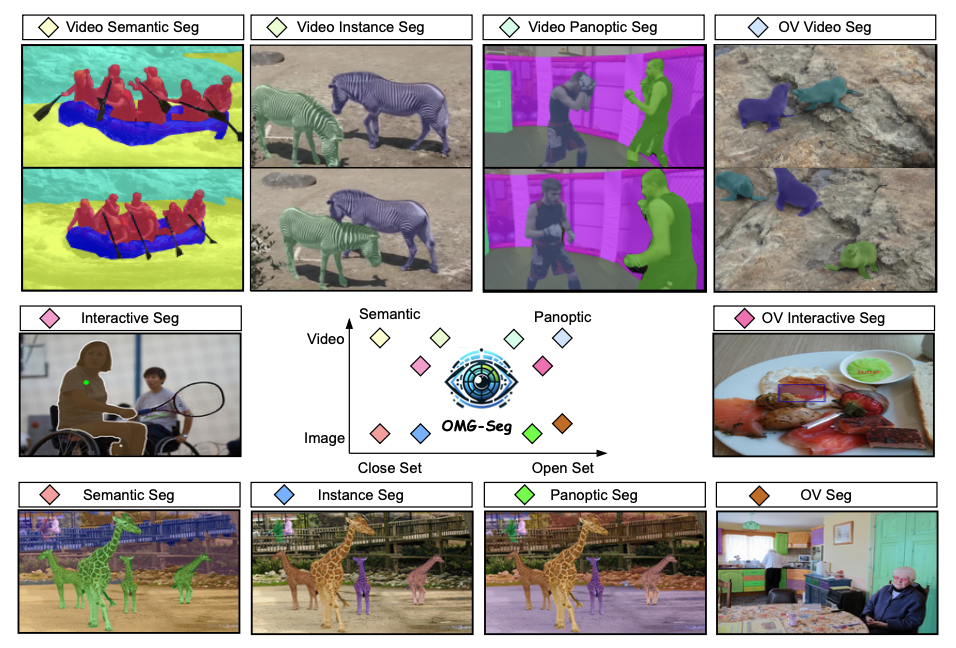
OMG-Seg: Is One Model Good Enough For All Segmentation?
OMG-Seg is One Model that is Good enough to efficiently and effectively handle all the segmentation tasks, including image semantic, instance, and panoptic segmentation, as well as their video counterparts, open vocabulary settings, prompt-driven, interactive segmentation.
Dmytro Spodarets·Feb 8, 2024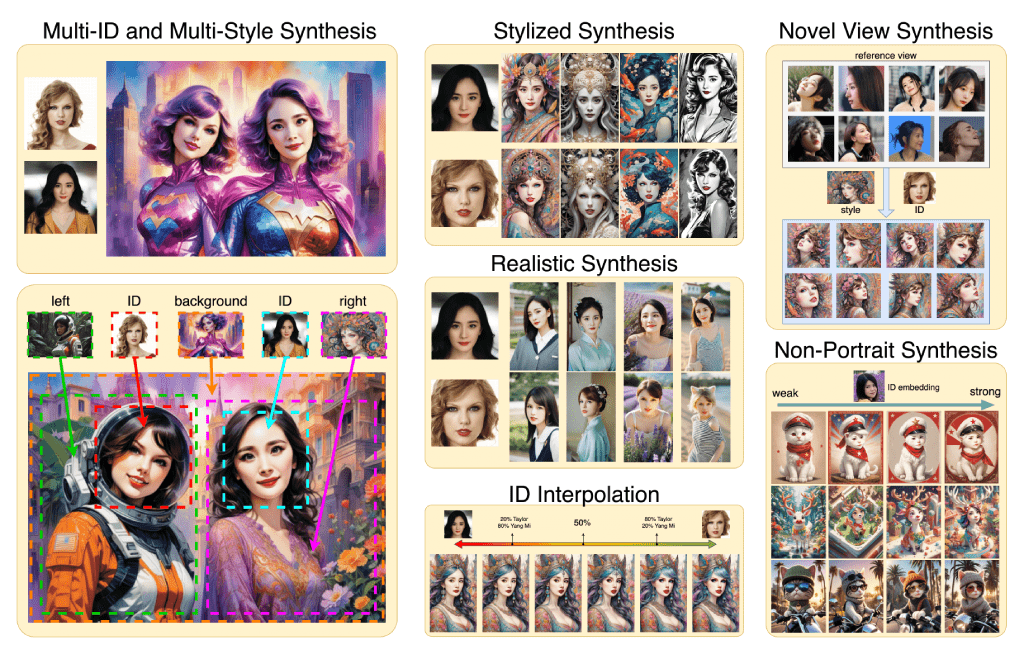
InstantID : Zero-shot Identity-Preserving Generation in Seconds
InstantID, powered by diffusion models, offers plug-and-play image personalization in various styles using one facial image, ensuring high fidelity. It demonstrates remarkable efficiency and performance, making it highly beneficial for applications requiring identity preservation.
Dmytro Spodarets·Feb 5, 2024