AutoAvatar: Autoregressive Neural Fields for Dynamic Avatar Modeling
In their new work, AutoAvatar, researchers have made implicit avatar modeling possible for the first time. It is an autoregressive approach for modeling dynamically deforming human bodies directly from raw scans. 0:00/1× Animated 3D models of the human body are a key tool for applications ranging from virtual fitting to social telepresence. AutoAvatar models body geometry implicitly -- using a signed distance field (SDF) -- and can learn directly from raw scans without requiring temporal match
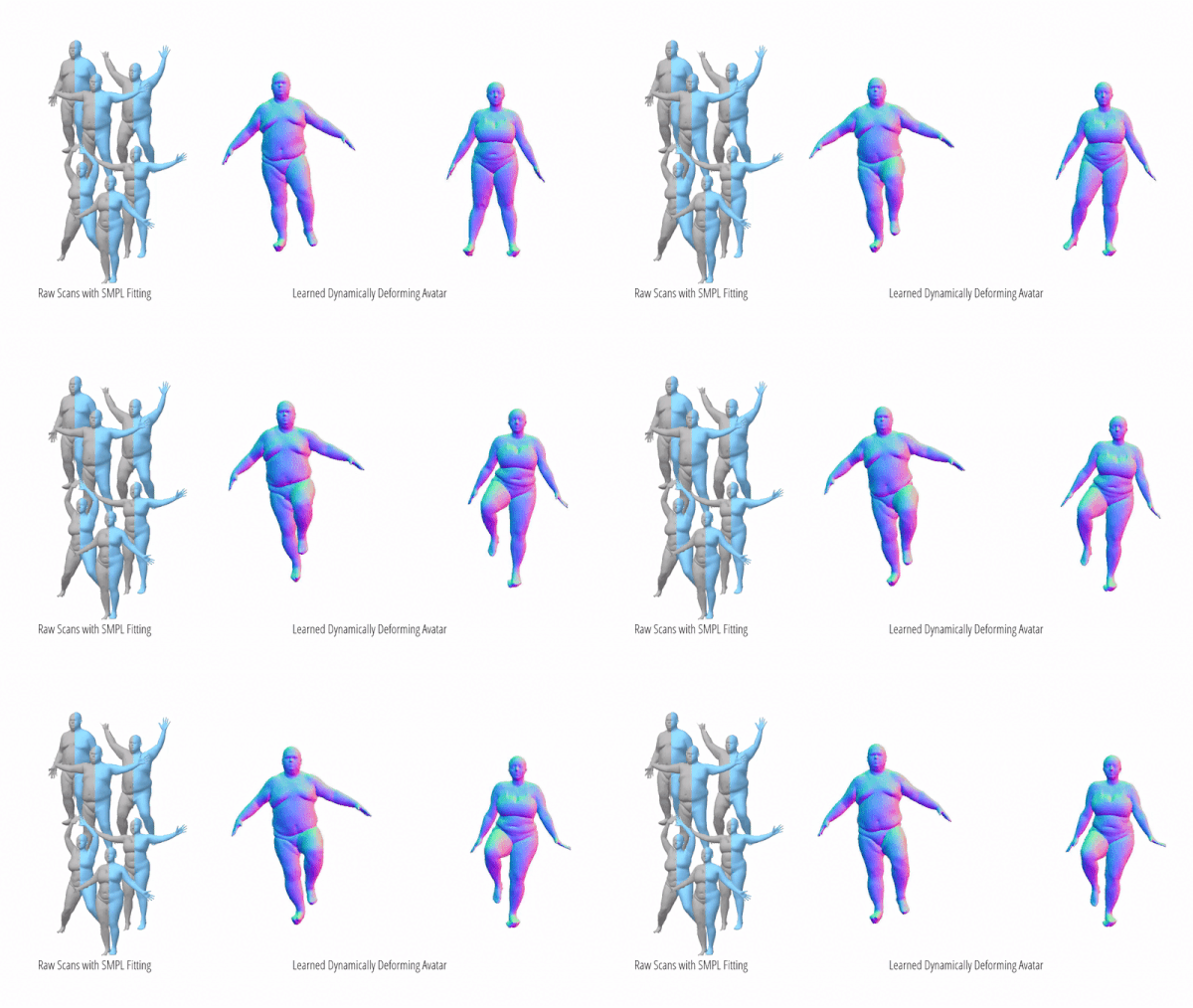
In their new work, AutoAvatar, researchers have made implicit avatar modeling possible for the first time. It is an autoregressive approach for modeling dynamically deforming human bodies directly from raw scans.
Animated 3D models of the human body are a key tool for applications ranging from virtual fitting to social telepresence. AutoAvatar models body geometry implicitly -- using a signed distance field (SDF) -- and can learn directly from raw scans without requiring temporal matches for control. In addition, like physics-based modeling, AutoAvatar determines the full shape of the avatar, given the history of shapes and movements.
The approach is an autoregressive model that takes a person's pose and shape history as input, and then creates an implicit surface for the future frame. The model is supervised directly with raw body scans, and requires a training dataset of 4D scans (a sequence of 3D scans) along with fitted SMPL body models.
Because the explicit representation of shapes as implicit surface level sets is prohibitively expensive for end-to-end training, the researchers introduced the notion of hinged observation points - vertex locations on the base articulation model - that are used as a local point to define the entire body geometry.
The base implicit surface is encoded as a field of elevations relative to the articulated observer points. These are then converted into dynamic latent feature maps in UV space and the resulting features are mapped to SDF, linking a continuous three-dimensional space with the learned features on the SMP vertices.
You can read all the details by clicking on the links below.
- Project - https://zqbai-jeremy.github.io/autoavatar/
- Paper - https://arxiv.org/pdf/2203.13817.pdf
- Code - https://github.com/facebookresearch/AutoAvatar
We also recall the equally interesting Fundamental AI Research (FAIR) study on audio data hypercompression, which shows how AI can be used to ensure that audio messages do not glitch or slow down when the Internet connection is poor.

Founder and Chief Editor of Data Phoenix — a San Francisco Bay Area media and education platform focused on AI and Data.
Continue reading
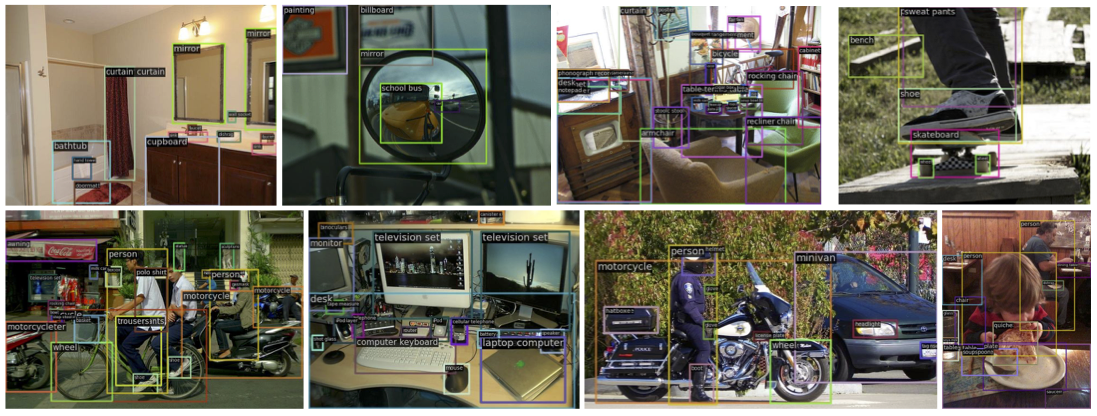
YOLO-World: Real-Time Open-Vocabulary Object Detection
YOLO-World boosts YOLO with open-vocabulary detection via vision-language modeling, pre-training on large datasets. Efficiently detects objects zero-shot, outperforming state-of-the-art in accuracy and speed.
Dmytro Spodarets·Feb 12, 2024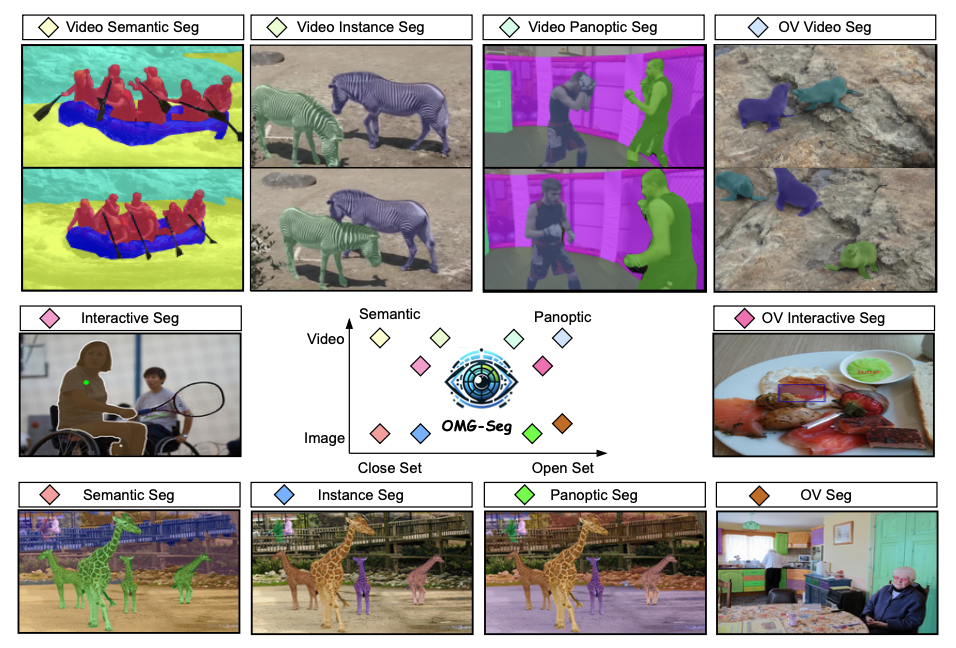
OMG-Seg: Is One Model Good Enough For All Segmentation?
OMG-Seg is One Model that is Good enough to efficiently and effectively handle all the segmentation tasks, including image semantic, instance, and panoptic segmentation, as well as their video counterparts, open vocabulary settings, prompt-driven, interactive segmentation.
Dmytro Spodarets·Feb 8, 2024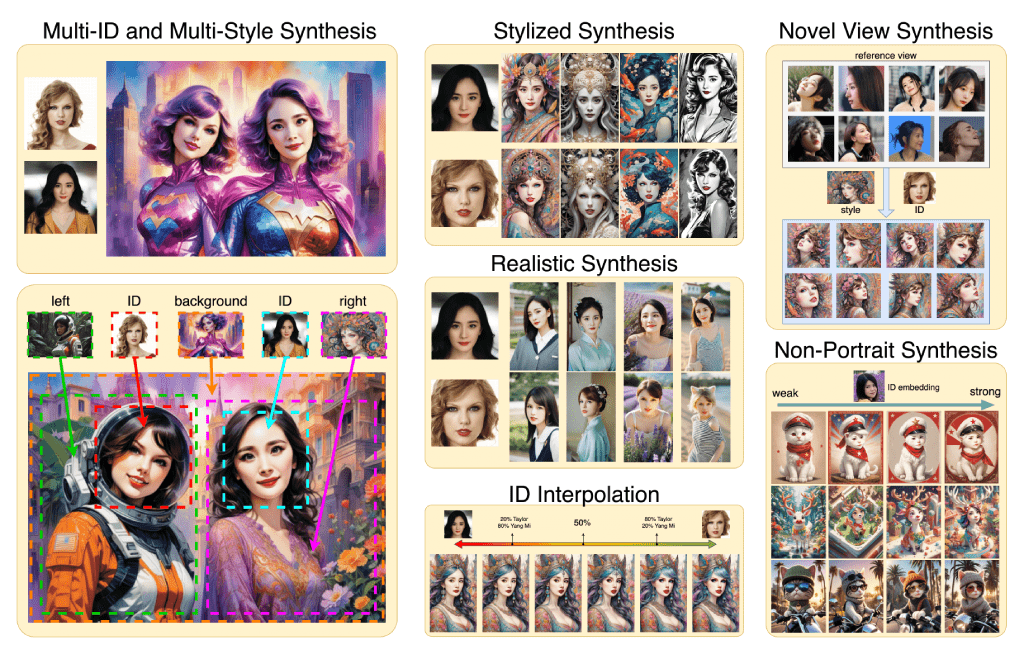
InstantID : Zero-shot Identity-Preserving Generation in Seconds
InstantID, powered by diffusion models, offers plug-and-play image personalization in various styles using one facial image, ensuring high fidelity. It demonstrates remarkable efficiency and performance, making it highly beneficial for applications requiring identity preservation.
Dmytro Spodarets·Feb 5, 2024