Your AI Agent Isn't Crashing. It's Bleeding Tokens.
Elizabeth Fuentes explains how an AI agent can waste tokens without ever throwing an error. She examines context overload, slow MCP or API calls, and repetitive tool loops, then shows how pointers, async handles, hooks, and explicit tool states can contain each failure.
Elizabeth Fuentes explains that silent agent failures often appear as rising token use, stalled workflows, or repeated tool calls rather than exceptions. She walks through three ways to put clearer boundaries around those failures: keep bulky tool output behind a memory pointer, return a handle for long-running external work, and use invocation hooks to stop repetitive behavior. Fuentes's central engineering point is that the model should receive only the context and tool state it needs. The discussion then extends the same principle to observability, evaluation, semantic tool selection, graph queries, and access controls.
More from the studio
 1:02:51Tech Talks
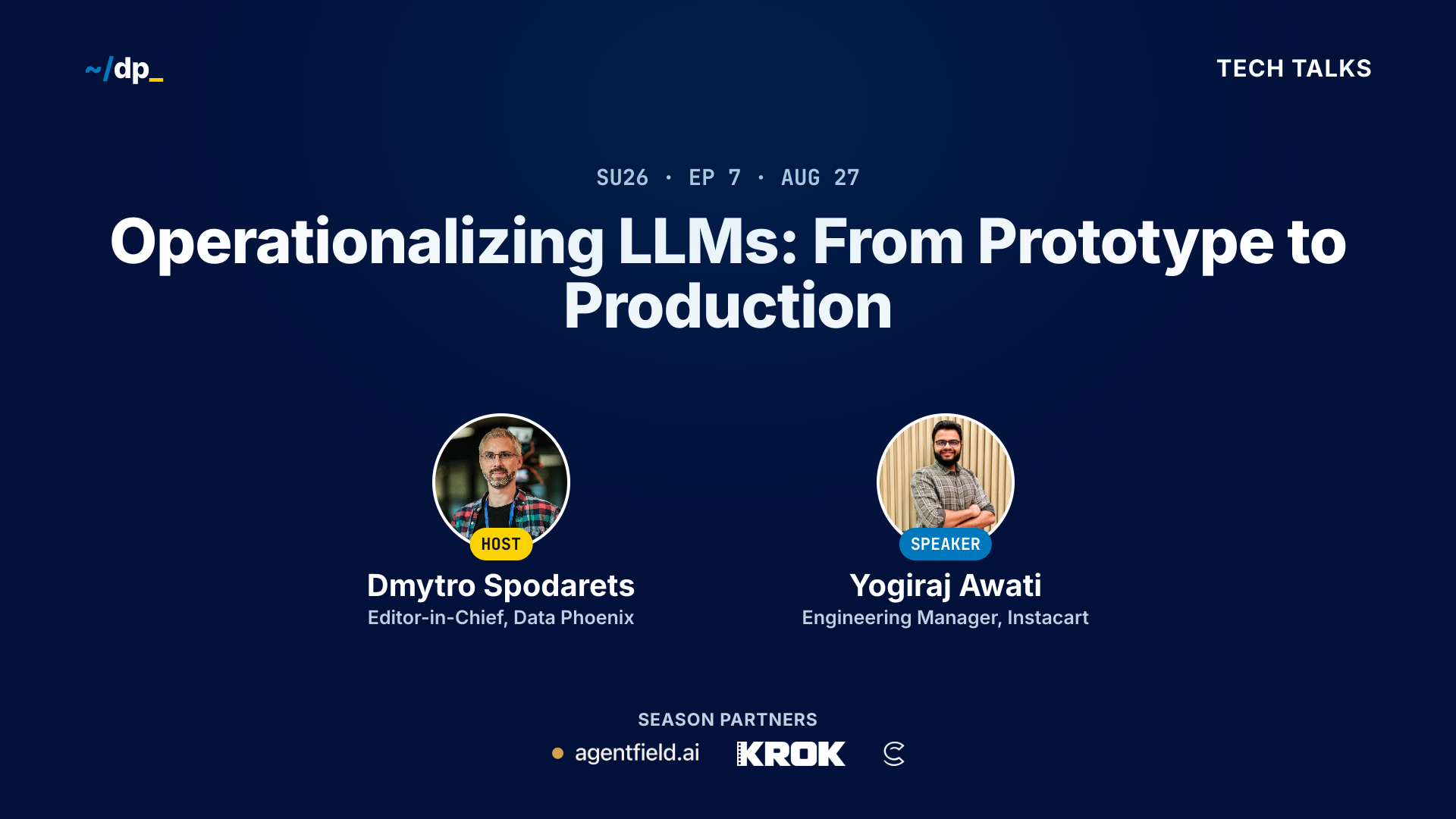
Operationalizing LLMs: From Prototype to Production
Yogiraj Awati shares how Instacart moves LLM applications beyond prototypes through retrieval, offline and online evaluation, guardrails, observability, and provider fallbacks. Two case studies cover recipe ingestion and Carebot support workflows with API-backed actions and human handoff.
 Yogiraj Awati·Sep 17, 2026
 1:17:55Tech Talks
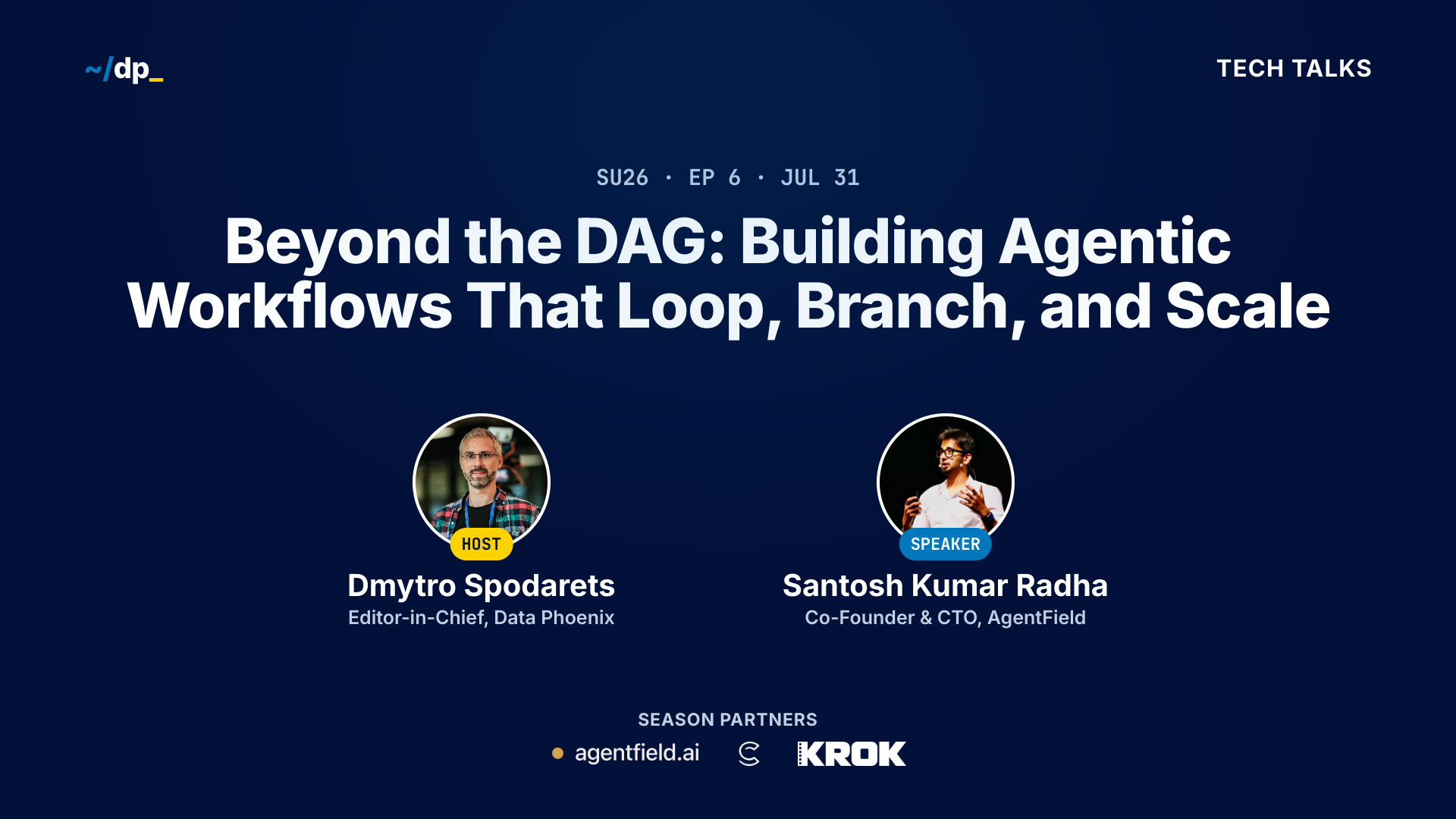
Beyond the DAG: Building Agentic Workflows That Loop, Branch, and Scale
Agentic workflows loop, branch, retry, and trigger new work instead of following a fixed DAG. Santosh Kumar Radha explains how AgentField uses typed functions, structured outputs, stopping and escalation patterns, event triggers, and controls for scaling, identity, and authorization.
 Santosh Kumar Radha·Sep 17, 2026
 48:04Tech Talks
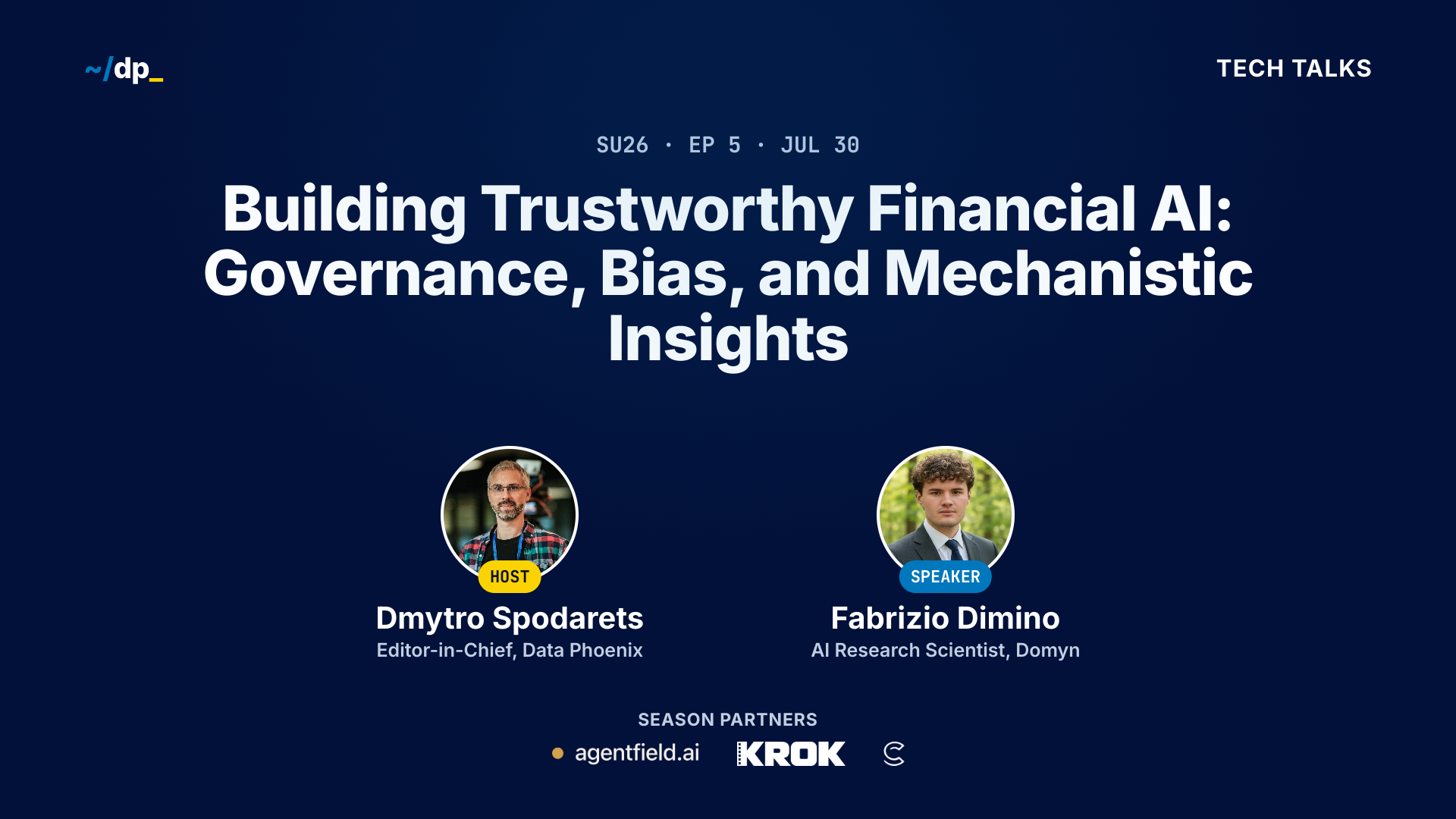
Building Trustworthy Financial AI: Governance, Bias, and Mechanistic Insights
Fabrizio Dimino examines why financial LLM recommendations can change when option order changes. He connects positional-bias tests and mechanistic interpretability with finance-specific red teaming, risk-sensitive scoring, model validation, and AI governance.
 Fabrizio Dimino·Sep 17, 2026