Runway launches GWM-1 models for worlds simulation, robotics, and avatar creation
Runway launched GWM-1, its first general world model family with three variants for explorable environments, conversational avatars, and robotic training. The company also updated its video generation model, Gen-4.5, with native audio generation and multi-shot editing capabilities.
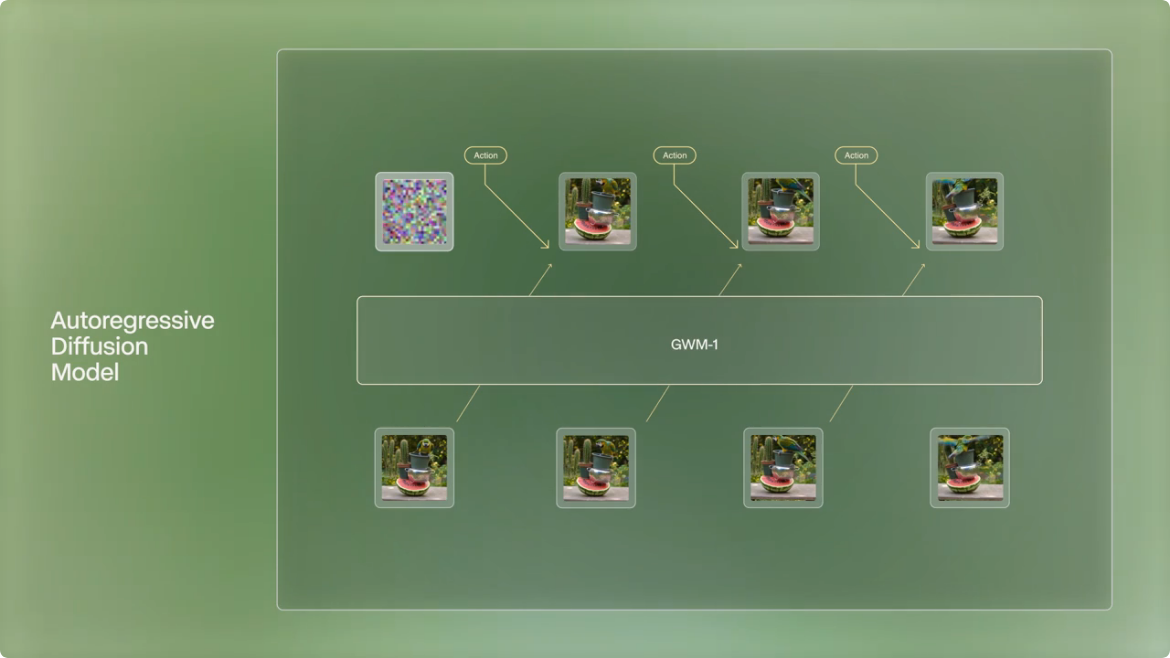
Runway has entered the world model race with GWM-1, a general-purpose, interactive AI system designed to build environments and simulate future events within them. Built on the company's recently launched Gen-4.5 video generation model, GWM-1 produces outputs that run at 24 fps in a 720p resolution. These outputs can be controlled interactively through camera movements, robot commands, and audio.
GWM-1 arrives in three specialized variants. GWM Worlds creates explorable environments where users can navigate infinite, spatially consistent spaces for gaming, VR, and agent training. GWM Robotics generates synthetic training data for robot policy development and enables safer simulation-based testing. GWM Avatars produces realistic conversational characters with natural facial expressions, gestures, and lip-syncing for education and customer service applications.
While these variants currently exist as separate models, Runway plans to unify them into a single system. The company is making GWM Robotics available through a Python SDK and is in discussions with robotics firms for enterprise deployment.
Alongside the world model launch, Runway updated Gen-4.5 with native audio generation, audio editing capabilities, and multi-shot video editing that can create one-minute videos with character consistency and complex camera angles. These updates to Gen-4.5 position Runway as a serious competitor to offerings like Kling AI's all-in-one video suite.
Runway's entry to the world model space seems appropriately timed, as more voices in the AI industry echo the realization that language models alone will likely be insufficient to tackle truly complex problems, such as robotics or scientific discovery. These, along with some other areas of impact, have long been posited as areas in which AI can jumpstart a revolutionary transformation. However, even if some meaningful advances have been made, and LLMs have improved at an impressive speed since ChatGPT first arrived in the scene, truly significant AI-assisted development in these areas remain to be seen.
Ellie Ramirez-Camara is the News Editor at Data Phoenix, where she writes the daily AI newsdesk — covering model releases, research, funding rounds, and policy across the AI and machine-learning industry. She tracks announcements from labs and startups alike and distills them into clear, source-linked reporting for practitioners.
More news

AWS releases six open-source Hugging Face deployment skills for SageMaker

Google Research releases MilleMiglia logistics benchmark generator

AWS launches AgentCore Runtime V2 with elastic memory and snapshot starts