Google launches WeatherNext 3 across Search, Gemini, Maps and Cloud
Google says its latest AI weather model is moving into consumer and enterprise services with hourly forecasts and higher-resolution surface data.
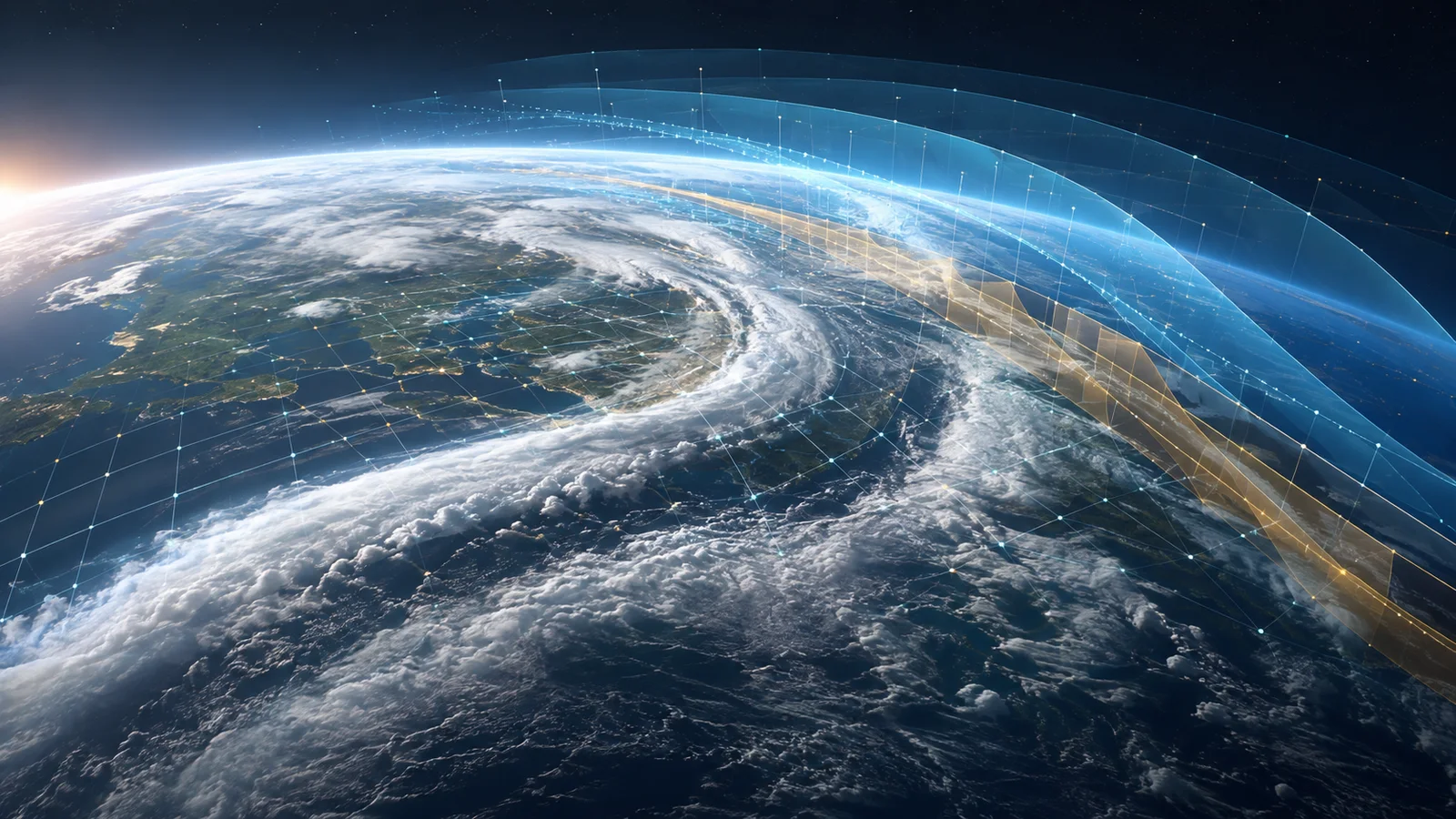
Google DeepMind and Google Research introduced WeatherNext 3 on Thursday, saying the AI forecasting model would begin powering weather features across Google Search, the Gemini app, Google Maps and enterprise services.
That pushes the system past a research release and into widely used consumer products and Google Cloud infrastructure. Google said forecasts would also be available through the Google Maps Platform Weather API, Google Earth Engine, BigQuery and Google Cloud Storage. The company did not provide product-by-product rollout data showing universal availability. WeatherNext 3 follows DeepMind’s earlier WeatherNext cyclone-forecasting release.
The model draws on live global geostationary satellite mosaics alongside historical analysis, according to Google’s announcement. Google describes the architecture as a mesh transformer capable of generating dense global weather fields, cyclone tracks and predictions for specific station locations.
Forecasts step forward in one-hour increments, and the model is initialized every hour, according to Google’s Earth Engine documentation. Runs started every six hours reach out 15 days; the hourly runs in between stop at 48 hours.
Resolution varies by output. Google documents roughly five kilometers for some surface variables, 10 kilometers for others and 25 kilometers for atmospheric variables. Its Earth Engine catalog lists a 5,566-meter pixel size for the station-head bands available there.
In its own evaluations, Google reported medium-range precipitation improvements of as much as 60% against IMERG satellite estimates, 30% against the US-focused MRMS system and 10% against rain-gauge observations at early lead times. Those are company-reported figures, and the reviewed evidence did not independently reproduce them. Google tied its claim that WeatherNext 3 is its most accurate global model to live evaluations on Brightband’s Operational WeatherBench, where rankings can shift as new forecasts are scored.
The downloadable Earth Engine dataset comes with its own caveat. Google labels it experimental and says it is not intended, validated or approved for real-world use, and the documentation warns that the operational dataset’s accuracy may not directly match results reported for the underlying research model.
More news
AWS releases six open-source Hugging Face deployment skills for SageMaker

Google Research releases MilleMiglia logistics benchmark generator

AWS launches AgentCore Runtime V2 with elastic memory and snapshot starts